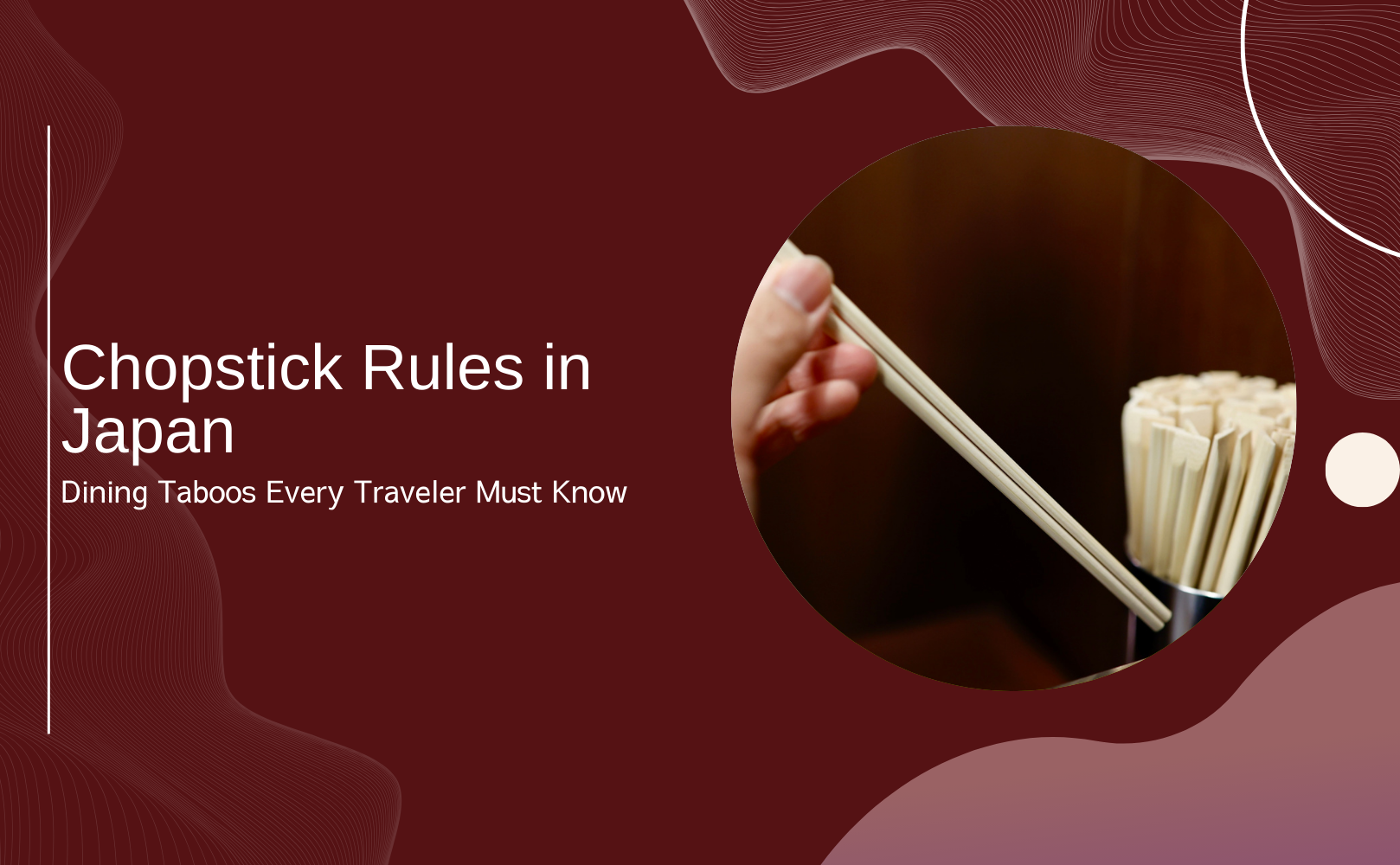
So you’ve finally booked that trip to Japan — amazing! 🎉 You’ve got your itinerary packed with ramen shops, sushi bars, and izakayas, and you’re ready to eat your way through the country. But wait — before you pick up those chopsticks, there are some seriously important things you need to know.
Japanese dining etiquette runs deep, and chopstick rules in particular are tied to culture, religion, and even funeral rituals. Some of these mistakes might seem totally harmless to us, but to a Japanese person sitting across the table, they can be genuinely shocking. The good news? Once you know the rules, they’re super easy to follow — and your Japanese friends or hosts will absolutely notice the effort! 😊
Let’s break down all the chopstick taboos you need to know before your next meal in Japan.
What Is “Kirai-Bashi”?
Before we dive in, let’s talk about a key word: kirai-bashi (嫌い箸), which literally translates to “disliked chopstick behavior.” This is the umbrella term for all the chopstick actions considered rude or taboo in Japanese culture. There are quite a few of them, and several are directly linked to Buddhist funeral rites — which is exactly why Japanese people react so strongly when they see these behaviors at the dinner table.
Think of kirai-bashi as the ultimate list of chopstick don’ts. Let’s go through them one by one! 🥢
The Most Serious Chopstick Taboos
Tate-Bashi — Sticking Chopsticks Upright in Rice
This is arguably the biggest no-no on the entire list. Sticking your chopsticks straight up into a bowl of rice is deeply associated with Japanese Buddhist funeral ceremonies, where rice is offered to the deceased with chopsticks standing upright — it’s essentially a death offering. Doing this at a regular meal is considered incredibly disrespectful and will make everyone at the table deeply uncomfortable 😰
Whenever you need to put your chopsticks down, use the hashi-oki (箸置き), the small chopstick rest provided at most Japanese restaurants. No rest available? Lay them neatly across the rim of a dish — just never stick them in the rice.
Hashi-Watashi — Passing Food Chopstick to Chopstick
This one surprises a lot of people! Passing food directly from your chopsticks to another person’s chopsticks is another major funeral taboo in Japan. During cremation ceremonies, family members pass the deceased’s bones from chopstick to chopstick when placing them into the urn — so recreating this gesture at the dinner table is considered extremely inappropriate 😟
If you want to share food with someone, always place it on a separate small plate (取り皿, tori-zara) first, then let them pick it up themselves.
Watashi-Bashi — Resting Chopsticks Across a Bowl
Balancing your chopsticks horizontally across the top of your bowl might seem like a harmless way to take a break from eating, but in Japan this signals that you’re done eating — and in some regions, it’s also associated with a bridge to the afterlife 🌉 This can send a confusing or even unsettling message during a meal.
Always use the chopstick rest, or if there isn’t one, create a makeshift rest using the chopstick wrapper (origami-style — Japanese restaurants often show you how!).
More Chopstick Rules You Might Not Know
Sashi-Bashi — Spearing Food with Chopsticks
Using chopsticks like a fork and spearing your food might feel practical when you’re struggling with a slippery piece of tofu, but it’s considered very bad manners in Japan 😬 It looks aggressive and can also imply that the food is difficult to eat — which is a subtle insult to the cook. Practice the pinching technique, and you’ll get the hang of it faster than you think!
Mayoi-Bashi — Hovering Chopsticks Over Food Indecisively
We’ve all been there — standing over a spread of delicious dishes and moving our chopsticks back and forth, trying to decide what to eat first 🤔 In Japan, this is called mayoi-bashi and is seen as indecisive and a little disrespectful. The idea is that you should decide what you’re going to eat before you reach for it. Decide first, then move your chopsticks!
Neburi-Bashi — Licking Your Chopsticks
Even if you’ve gotten every last bit of sauce onto your chopsticks, resist the urge to lick them clean. Neburi-bashi is considered unhygienic and pretty off-putting in Japanese dining culture 🙊 Use a napkin if needed, or just accept that a tiny bit of flavor might be lost — it’s not worth the social awkwardness!
Yose-Bashi — Dragging Dishes Toward You with Chopsticks
If a dish is just out of reach, don’t use your chopsticks to drag it closer. Chopsticks are for eating food, not for moving tableware around. Using them to pull a bowl or plate toward you is seen as lazy and impolite 😅 Simply lean forward slightly or politely ask someone to pass it to you.
Nigiri-Bashi — Gripping Chopsticks Like a Fist
Holding chopsticks in a full fist grip — the way a child might hold a crayon — is called nigiri-bashi and can actually come across as threatening or aggressive, as it resembles the way one might hold a weapon ⚔️ Even if you’re still getting comfortable with chopstick technique, try your best to hold them properly between your fingers. It doesn’t have to be perfect — just avoid the full fist grip.
A Few Bonus Tips for the Dining Table
Always Say “Itadakimasu” Before Eating
Before you take your first bite, say “Itadakimasu” (いただきます) 🙏 This beautiful phrase expresses gratitude for the meal, the ingredients, and everyone involved in bringing it to your table. It’s a deeply ingrained ritual in Japanese culture, and even non-Japanese speakers doing it will earn instant respect and warm smiles from any Japanese host.
When you finish eating, close out with “Gochisousama deshita” (ごちそうさまでした) — a heartfelt “thank you for the feast.” These two phrases alone can transform your entire dining experience in Japan.
Don’t Mix Up the Oshibori Towel
When you sit down at a Japanese restaurant, you’ll likely receive a small damp towel called an oshibori (おしぼり) 🧻 This is for your hands only — not your face, and definitely not for wiping up spills on the table. Use it to clean your hands before eating, then fold it neatly and set it to the side.
Hold Your Rice and Soup Bowls
Unlike in some other cultures where lifting bowls from the table is seen as rude, in Japan it’s completely correct — and expected! — to lift your rice bowl and soup bowl while eating. Leaving them on the table and hunching over to eat from them is actually considered the impolite option here. Scoop the rice toward your mouth with the bowl held close 🍚
Don’t Stack or Stack Empty Dishes
Instinct might tell you to helpfully stack your empty dishes at the end of a meal, but in Japan this is actually frowned upon. Leave your dishes exactly where they are — clearing and organizing the table is entirely the staff’s responsibility. Stacking dishes can disrupt the service flow and may even damage delicate Japanese tableware 🍽️
The Golden Rule of Japanese Dining
If there’s one thing to take away from all of this, it’s that Japanese food culture is built on gratitude and respect — for the ingredients, the cook, the people you’re eating with, and the space you’re in 🌸 The rules might seem strict at first glance, but they all stem from this beautiful core value.
Don’t stress about being perfect. Most Japanese people are incredibly understanding toward foreign visitors who are genuinely trying their best. Just avoid the big taboos (especially tate-bashi and hashi-watashi!), say your itadakimasu, and bring a sense of mindful appreciation to the table — that’s truly all you need to have a wonderful, respectful dining experience in Japan